
 Рус
Рус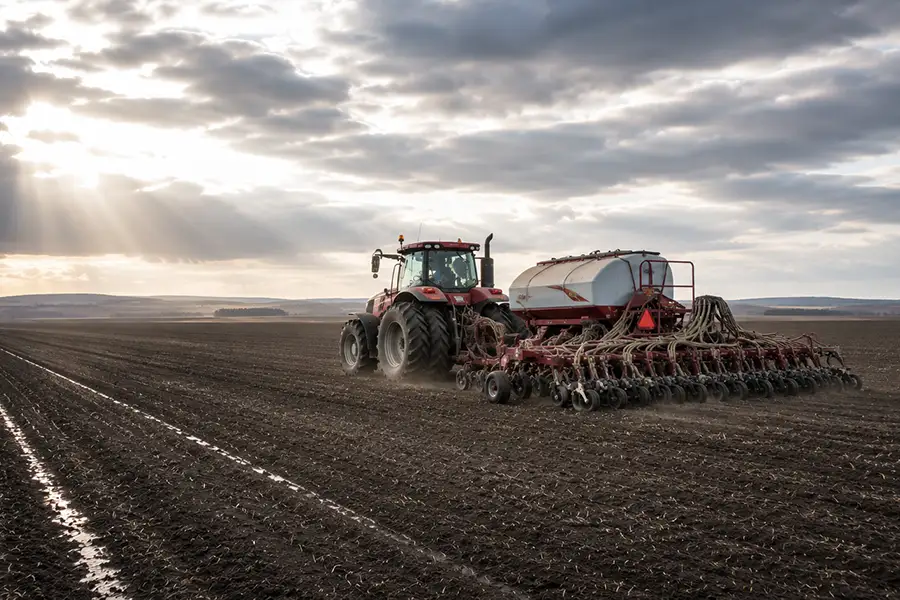
The spring sowing campaign in the Saratov Region is entering its final stage. Preliminary results of the fieldwork were presented by Igor Gridnev, Deputy Minister of Agriculture of the Saratov Region, during a meeting of the Regional Duma Committee on Agrarian Affairs.
According to Mr. Gridnev, this year's campaign has been one of the most challenging in decades due to exceptional weather conditions. Frequent rainfall significantly slowed field operations, forcing farmers to carry out sowing during short periods of favorable weather.
The sowing of late-season crops, including buckwheat, millet, maize, and sunflower, is currently underway and is expected to be completed by June 20.
To date, 2.9 million hectares have been sown, representing 94% of the planned area. Approximately 120,000 hectares remain to be planted. Grain crops account for 960,000 hectares, or 80% of the planned acreage.
Adverse weather conditions prompted many farms to adjust their spring fieldwork strategy, shifting part of the acreage from early grain crops to later-maturing crops. Despite these challenges, the condition of spring crops is generally assessed as satisfactory to good.
Development of horticulture
The region is also continuing to develop its horticultural sector. This year, 48 hectares of intensive orchards have already been established.
In addition, RUB 202 million in government subsidies will be allocated to horticultural enterprises, including RUB 167 million specifically for the establishment of intensive orchards.
The funding will enable growers to plant an additional 365 hectares of orchards this autumn and carry out maintenance work on 385 hectares of existing plantations.
Seed supply and domestic breeding
The demand for seeds has been fully met for the current season. Priority was given to domestically bred seed varieties.
Their share reached 96% for grain crops, excluding maize, 67% for sunflower, 60% for soybean, and 58% for maize, demonstrating the growing role of Russian breeding programs in the region's agricultural production.